Alzheimer’s Care in Overland Park
If you’re looking for Alzheimer’s care in Overland Park, you’ve likely been on this road for a while. Maybe you’ve noticed the repeated questions, the misplaced keys, the moments where a familiar face doesn’t quite register. Searching for Alzheimer’s care is not a sign of giving up. It’s a sign that you love someone enough to find the right support before a crisis forces the decision.
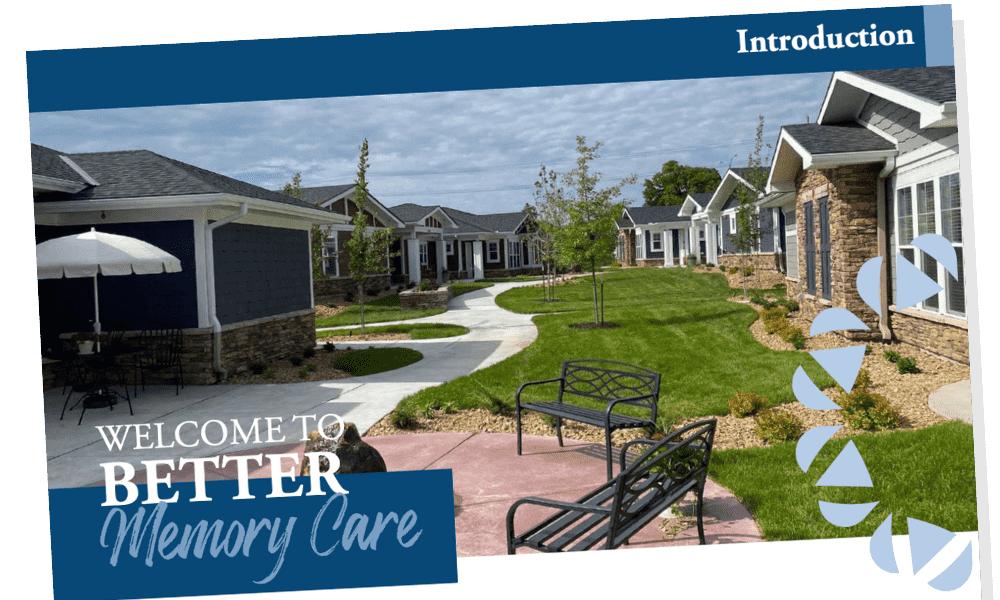
Maggie’s Place Overland Park Memory Care (at Colonial Village) is a village-style memory care community located at 12610 W 137th St in southwest Overland Park, KS 66221. Five single-story cottage homes, sensory gardens, and secure courtyards create an environment purpose-built for residents living with Alzheimer’s disease. Our 24/7 specialized care team serves families throughout Overland Park, Leawood, Lenexa, Olathe, Prairie Village, and the greater Kansas City area. Because Alzheimer’s is the most common form of dementia, everything here is designed around the specific ways this disease affects memory, behavior, and daily life.

What Makes Our Approach Different
Most families searching for Alzheimer’s care near Overland Park will tour communities that look like small hospitals with long corridors and shared dining halls. Maggie’s Place was designed the opposite way. Each cottage home looks and feels like a real house, with a shared kitchen, living room, and backyard courtyard. This layout reduces the confusion and agitation that institutional settings often trigger in someone with Alzheimer’s.
Our staff is trained specifically in Alzheimer’s and dementia care, not general assisted living. That distinction matters. It means they understand why a resident asks the same question ten times in an hour, why sundowning can change a calm afternoon, and how to redirect without confrontation. It also means every care plan is built around the individual, drawing on their personal history, preferences, and stage of disease rather than a generic checklist.
- Village-style cottage homes that feel like a real neighborhood, not a facility, reducing confusion and anxiety
- 24/7 Alzheimer’s-trained staff providing medication management, hands-on daily support, and consistent familiar faces
- Secure courtyards and wander-management technology so residents can move freely without the risk of elopement
- Sensory gardens and calming spaces designed for residents sensitive to noise, crowds, or overstimulation
- Music, art, and reminiscence therapy that helps residents stay connected to identity and long-term memories
- Family-centered care plans built around each resident’s life story, updated as the disease progresses

Signs It May Be Time for Alzheimer’s Care
Families often wonder whether it’s “too early” to consider an Alzheimer’s care community. In most cases, the bigger risk is waiting too long. If you’re seeing any of the following in a loved one, it may be time to explore your options:
- Repeating questions or stories within the same conversation, often without realizing it
- Getting lost in familiar places, including their own neighborhood or even rooms in the house
- Difficulty with once-familiar tasks like managing medications, paying bills, cooking, or following a recipe
- Personality or mood changes such as increased suspicion, withdrawal, irritability, or apathy
- Unsafe moments at home including leaving the stove on, missing meals, or falling more frequently
- Caregiver burnout in the family member providing daily care, including exhaustion, health decline, or feeling overwhelmed
If you recognize these signs in a loved one in Overland Park, Leawood, Olathe, or a neighboring community, our team can help you think through next steps without pressure. Some families start with respite care or adult day care to ease into the transition. Call us at (913) 318-1880.
How Care Adapts as Alzheimer’s Progresses
Alzheimer’s disease is progressive, and the care someone needs in the early stage looks very different from what they’ll need later. One of the most important questions to ask any Alzheimer’s care community is how they handle that progression. At Maggie’s Place, residents don’t have to move to a different facility as their needs change. Our team adjusts care in place, within the same cottage home and with the same familiar caregivers.
Early-Stage Alzheimer’s
In the early stage, a person with Alzheimer’s can still do many things independently but begins to experience noticeable memory lapses: forgetting recent conversations, misplacing everyday items, losing track of appointments. At this stage, our focus is on maintaining independence while providing the structure and safety net that a home environment may no longer offer. Residents follow consistent daily routines, engage in cognitive activities like music and art therapy, and benefit from the social connection of cottage-home living, which helps counter the isolation that often accelerates decline.
Middle-Stage Alzheimer’s
The middle stage is typically the longest and brings the most significant changes. Residents may need hands-on help with dressing, bathing, and meals. Wandering, sundowning, and behavioral shifts become more common. Our 24-hour staff is trained to manage these changes with patience and skill, using redirection, calming routines, and sensory-friendly environments rather than restraints or sedation. Care plans are updated frequently during this stage, often in close collaboration with families, to keep pace with evolving needs.
Late-Stage Alzheimer’s
In the late stage, residents require around-the-clock assistance with nearly all daily activities. Communication may be limited to a few words or nonverbal cues. Our team shifts focus to comfort, dignity, and quality of life, providing gentle physical care, sensory engagement, and consistent human connection. Families considering this level of support can also visit our nursing home care page to understand how our approach compares to traditional skilled nursing settings.
Frequently Asked Questions
What is the difference between Alzheimer’s care and memory care?
Alzheimer’s disease is the most common cause of memory loss that requires dedicated care, but it is not the only one. “Memory care” is a broader term that covers support for Alzheimer’s alongside other conditions like vascular dementia, Lewy body dementia, and frontotemporal dementia. At Maggie’s Place, our memory care program is built to support the full range of these diagnoses, with care plans tailored to each resident’s specific condition and stage.
When should I consider Alzheimer’s care for my parent in Overland Park?
There is no single right moment, but common signals include repeated unsafe incidents at home, missed medications, wandering, personality changes, and caregiver exhaustion. If you’re spending more time managing safety than enjoying time together, that’s worth paying attention to. Our team is happy to talk through