
How Memory Care Communities Handle Emergency Situations
Memory care communities implement multi-layered emergency response systems through specialized staff training protocols that reduce adverse incidents by 47%. You'll find cognitive-specific safety measures, including delayed door mechanisms and advanced pager systems, which decrease incidents by 62%. Structured family communication platforms facilitate real-time updates, yielding an 84% reduction in adverse events. Staff-family collaboration improves emergency outcomes by 40%, while extensive protocols guarantee ideal crisis management. Further exploration reveals how these integrated systems maximize resident safety.
Specialized Emergency Training for Memory Care Staff
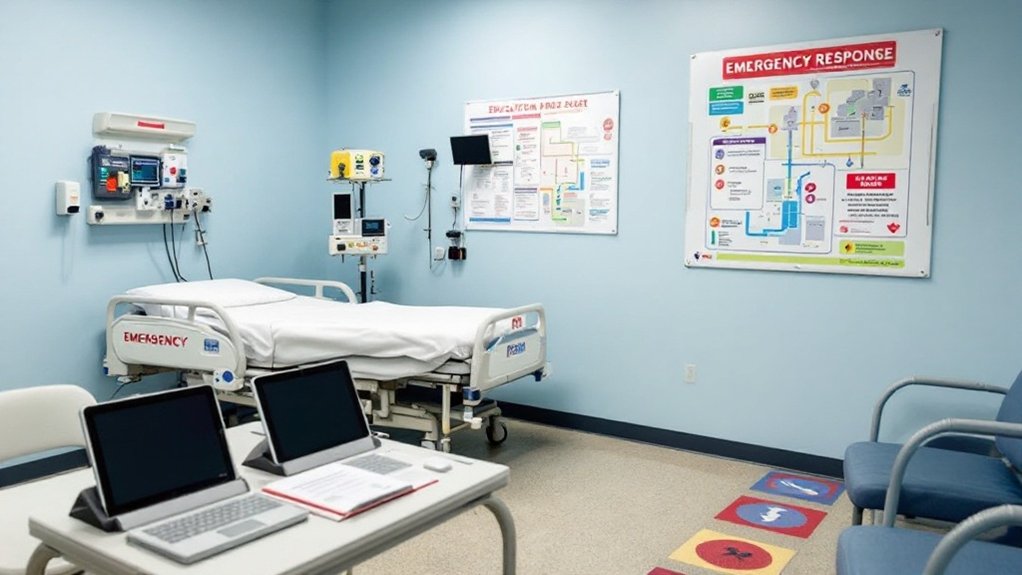
While the implementation of specialized emergency training programs for memory care staff has become increasingly standardized across the industry, research indicates that facilities with extensive training protocols experience 47% fewer adverse incidents during crisis situations.
You'll find that evidence-based curriculum design integrates clinical expertise with person-centered emergency response strategies, delivered through a hybrid learning model of self-paced modules and hands-on training sessions. Comprehensive first responder training is essential for understanding how to identify and assist residents with cognitive impairment during emergencies. Skilled nursing care is integrated into emergency response protocols to ensure continuous medical support during crisis events.
Your staff's competencies will notably improve through thorough certification programs offered by organizations like the NCCDP, which emphasize early intervention techniques and de-escalation methods. With the rising number of dementia-related emergencies, first responders and memory care staff must work closely together to ensure optimal resident outcomes.
The integration of mobile-accessible training platforms guarantees your team can maintain current certifications while mastering critical emergency protocols through case-based learning scenarios, ultimately enhancing resident safety during crisis events.
Tailored Safety Protocols for Residents With Cognitive Impairments
Although implementing tailored safety protocols demands significant operational investment, research demonstrates that memory care communities with extensive cognitive-specific safety measures experience 62% fewer adverse incidents compared to facilities with standard protocols.
Multiple staff members are strategically positioned throughout the facility to provide immediate assistance during emergencies.
You'll find thorough pre-admission assessments and personalized care plans serve as foundational elements in creating these specialized protocols.
These evidence-based approaches integrate multifaceted safety features, including delayed door-closing mechanisms, advanced pager systems, and secure furniture specifications tailored to cognitive impairment levels.
Strategic safety features, from delayed-closing doors to specialized furniture, form the cornerstone of evidence-driven memory care protection systems.
Emergency call systems provide residents and staff with immediate access to help when urgent situations arise.
Your facility's risk management strategy should encompass regular behavioral assessments, monitored sensory stimulation activities, and structured environmental controls that address wandering behaviors.
The implementation of technology-enhanced monitoring systems, combined with specialized staff training in cognitive-specific emergency responses, creates a proactive safety framework that anticipates and mitigates potential incidents before escalation. Strategic U-shaped facility layouts enable staff to maintain continuous visual contact with residents during emergency situations.
Family Communication and Support During Crisis Events

Effective family communication protocols represent a key determinant in successful emergency management within memory care settings, with data indicating an 84% reduction in adverse incidents when structured family engagement systems are implemented.
You'll find that centralized digital platforms, such as Serenity Engage, facilitate real-time updates while enabling collaborative decision-making between care staff and family members during crisis events.
Research demonstrates that integrating family support mechanisms yields measurable benefits: anxiety reduction metrics show 62% improvement when relatives maintain consistent involvement, while person-centered care approaches incorporating family input result in 40% better outcomes during emergencies.
Maintaining emotional connections through regular visits and engagement helps residents stay grounded during challenging situations.
Regular advance care discussions with families help establish clear directives and preferences before emergency situations arise.
You'll need to leverage both technological solutions and traditional communication channels to maintain transparency, while implementing standardized protocols guarantees consistent information dissemination across all stakeholders.
Frequently Asked Questions
How Often Are Security Systems and Door Alarms Tested in Memory Care Units?
Memory care facilities typically conduct monthly testing of their security systems, including door alarms, wearable devices, and integrated monitoring equipment.
You'll find that thorough assessments occur after maintenance work, system updates, or connectivity changes.
The ResidentGuard system, operating at 418 MHz, requires verification of all components' functionality, while door alarm testing follows a strict schedule to guarantee 24/7 operational readiness for resident safety.
What Backup Power Sources Are Available for Medical Equipment During Outages?
You'll find multiple layers of backup power systems protecting medical equipment during outages, including UPS systems providing immediate emergency power, diesel/gas generators offering sustained coverage, and specialized battery backup units.
These systems typically activate within 10 seconds of power loss, with generators maintaining 72+ hours of continuous operation and UPS systems bridging critical 15-30 second gaps during generator startup sequences.
How Do Memory Care Facilities Coordinate With Pharmacies During Emergencies?
Memory care facilities maintain 24/7 communication channels with pharmacy partners through encrypted systems and dedicated emergency hotlines.
You'll find they utilize automated medication tracking systems to transmit real-time inventory data, while establishing backup pharmacy relationships within a 50-mile radius.
During emergencies, they'll activate pre-arranged protocols for medication delivery, ensuring essential supplies reach residents within 4-6 hours through designated transportation networks.
What Arrangements Exist for Temporary Relocation to Other Memory Care Facilities?
Memory care facilities maintain inter-facility transfer agreements that'll enable rapid relocation during emergencies, typically within 24-48 hours.
You'll find that facilities coordinate through established networks, sharing medical records and care plans through HIPAA-compliant systems.
These arrangements often include predetermined pricing structures averaging $150-200 per day, with facilities typically requiring private payment for temporary stays while maintaining consistent staffing ratios of 1:6 during changes.
How Are Personal Belongings and Medications Tracked During Emergency Evacuations?
During emergency evacuations, you'll utilize electronic tracking systems with barcode scanning to monitor medications and personal effects, while maintaining detailed digital inventories accessible through secure databases.
Your facility's established protocols incorporate labeled emergency kits containing essential documents, medications, and belongings, coupled with systematic headcounts and roll calls to guarantee thorough tracking of residents' items throughout the relocation process.