

Addressing Sundown Syndrome in Memory Care Settings
You'll need to implement a multi-faceted approach to address sundown syndrome, which affects 20-45% of dementia patients in memory care settings. Focus on environmental modifications including controlled lighting protocols, temperature regulation between 68-72°F, and noise reduction strategies during peak sundowning hours. Establish consistent daily routines while incorporating physical activities during alert periods and cognitive engagement earlier in day. Proper staff training and environmental adaptations will reveal additional strategies for managing this challenging condition.
Understanding the Impact of Sundown Syndrome on Residents

While sundown syndrome manifests primarily through behavioral and cognitive disruptions during evening hours, its extensive impact on residents extends far beyond temporal boundaries, affecting roughly 20-45% of individuals with dementia-related conditions.
Sundowning's cognitive and behavioral impacts ripple far beyond evening hours, touching nearly half of all dementia patients in profound ways.
You'll observe that residents experience significant alterations in their daily functioning, including disrupted sleep-wake cycles, increased wandering behaviors, and compromised communication abilities. Caregivers often notice that symptoms include repetitive behaviors and agitation during late afternoon hours.
The syndrome's effects cascade through multiple domains of residents' lives, as they're likely to exhibit heightened confusion, aggressive tendencies, and marked difficulty maintaining established routines. Research suggests that seasonal changes may influence the severity of symptoms, particularly during winter months.
In clinical settings, you'll note that these behavioral changes often correlate with disruptions in circadian rhythms and neurological function, particularly involving the suprachiasmatic nucleus, while environmental and social factors can either ameliorate or exacerbate these symptoms.
Essential Environmental Modifications for Managing Sundowning
Since effective environmental modifications serve as primary interventions for managing sundown syndrome, healthcare facilities must implement extensive changes across multiple domains to enhance resident outcomes.
You'll need to establish thorough lighting protocols that incorporate bright natural light exposure during daytime hours while shifting to softer, warmer illumination during evening periods to regulate residents' circadian rhythms.
Create designated quiet zones with reduced environmental stimuli, incorporating sound-dampening materials and maintaining ideal room temperatures between 68-72°F. Staff members maintain a peaceful environment by minimizing loud background noises that could trigger agitation. Familiar objects and personal belongings should be placed throughout common areas to create recognizable spaces that promote comfort.
You should structure the environment to support consistent daily routines, integrating nature-based elements and ensuring adequate space for both stimulating daytime activities and calming evening pursuits.
Install dimmable lighting systems throughout the facility, particularly in corridors and bathrooms, while implementing noise reduction strategies during peak sundowning hours.
Practical Strategies for Staff and Family Caregivers
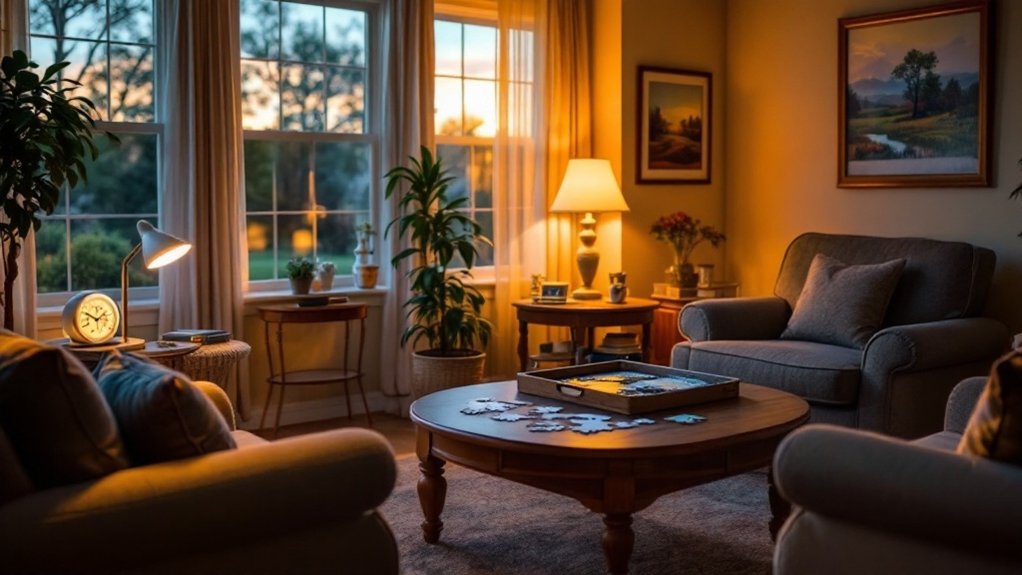
To effectively manage sundown syndrome, caregiving staff and family members must implement thorough, evidence-based strategies across five key domains: routine establishment, physical engagement, cognitive stimulation, basic needs management, and ongoing education.
You'll maximize intervention success by establishing consistent daily schedules while maintaining flexibility for individual needs, incorporating morning-focused activities to minimize evening disruptions. Ensuring exposure to bright natural light during daytime hours helps regulate circadian rhythms and reduce confusion. Limiting exposure to loud TV programs in the evening can significantly reduce agitation and anxiety.
Structure physical activities like walking or chair exercises during peak energy periods, while ensuring cognitive engagement through puzzles and music therapy earlier in the day. Creating a secure environment helps prevent wandering behaviors that often intensify during sundown hours.
Schedule energetic activities during alert hours and engage minds with therapeutic puzzles and music in morning sessions.
You'll need to monitor basic comfort metrics regularly, including hydration, pain levels, and environmental factors that could trigger agitation.
It's essential that you pursue ongoing education through specialized training programs and maintain access to professional guidance, as this greatly enhances your ability to recognize and respond to sundowning behaviors effectively.
Frequently Asked Questions
Can Medications Specifically Designed to Treat Sundowning Make Symptoms Worse?
Yes, medications intended to treat sundowning can paradoxically worsen symptoms.
You'll find antipsychotics can increase cognitive decline and mortality risks, while benzodiazepines often lead to heightened confusion and fall risks.
Even commonly prescribed sleep aids can exacerbate delirium and disorientation.
Your medication choices require careful consideration, as acetylcholinesterase inhibitors and antidepressants show variable effectiveness and may intensify agitation in some patients.
How Long Do Typical Sundowning Episodes Last?
Sundowning episodes typically last several hours, beginning in late afternoon or early evening and potentially continuing through the night.
You'll find that while exact durations vary by individual, research indicates episodes affect approximately 20% of Alzheimer's patients and persist until underlying triggers are addressed.
Environmental factors, circadian rhythm disruptions, and physiological changes influence the episode's length, with symptoms generally subsiding by morning.
Does Sundowning Occur in Other Forms of Dementia Besides Alzheimer's?
Yes, you'll find sundowning occurs across multiple dementia types, including vascular dementia, Lewy body dementia, and frontotemporal dementia, though it's most extensively documented in Alzheimer's disease.
While precise prevalence rates for non-Alzheimer's dementias aren't well-established, clinical observations indicate that sundowning symptoms manifest similarly across dementia variants, with temporal patterns and behavioral manifestations remaining consistent regardless of the underlying pathology.
Are Some Ethnic or Racial Groups More Prone to Sundown Syndrome?
Currently, there's insufficient scientific evidence to suggest that sundown syndrome affects any ethnic or racial groups disproportionately.
Unlike conditions such as metabolic syndrome or diabetes, which show clear ethnic patterns, sundowning appears to correlate more strongly with the underlying cognitive impairment than with ethnic background.
You'll find that research gaps exist in studying ethnic variations of sundowning, as most studies focus on its general prevalence in dementia populations.
Can Seasonal Changes Affect the Severity of Sundowning Symptoms?
Seasonal changes greatly impact sundowning symptoms through multiple physiological mechanisms, primarily through disruptions in circadian rhythms due to variations in natural light exposure.
You'll observe that shorter winter days can exacerbate symptoms by 20-30%, while temperature fluctuations and routine disruptions from daylight savings time create additional challenges.
Natural light exposure reduction affects melatonin production, potentially increasing agitation and confusion during evening hours by 25%.