

Memory Care and Cognitive Stimulation: Strategies for Success
You’ll find that modern memory care combines evidence-based Cognitive Stimulation Therapy (CST) with personalized activities and technological solutions to achieve measurable outcomes. Research shows CST sessions, conducted twice weekly for 45 minutes, can delay cognitive decline by six months, while tailored programs demonstrate a 45% improvement in task performance. Digital platforms and AI-powered systems enhance these interventions through real-time analysis and adaptive care plans, setting the foundation for thorough cognitive support strategies.
The Science Behind Cognitive Stimulation in Memory Care

While cognitive health has emerged as a critical focus in memory care, Cognitive Stimulation Therapy (CST) stands as an evidence-based intervention demonstrating measurable impacts on individuals with mild to moderate dementia.
The therapeutic framework operates through structured, multimodal activities including group discussions, word games, and physical exercises, typically administered in 45-minute sessions twice weekly. Individual stimulation therapy provides personalized one-on-one interventions for enhanced cognitive engagement. With a projected global prevalence increase to 115.4 million dementia cases by 2050, the need for effective cognitive interventions becomes increasingly critical.
CST sessions deliver structured cognitive engagement through varied activities, from group dialogue to physical movement, scheduled biweekly for optimal therapeutic impact.
The neurological basis for CST’s efficacy lies in its ability to delay cognitive decline by approximately six months, with research indicating improvements in multiple domains of function. Trained staff members provide specialized support to help residents maintain cognitive abilities through daily activities.
The Cochrane review’s validation of CST’s effectiveness parallels pharmaceutical interventions, particularly in enhancing communication skills and social interaction metrics.
When implemented consistently, you’re leveraging a thorough approach that combines physical activity’s circulatory benefits with cognitive engagement’s neural stimulation, resulting in documented improvements in quality of life measures.
Personalized Activities That Make a Difference
When implemented through evidence-based frameworks like the Tailored Activity Program (TAP), personalized cognitive stimulation activities demonstrate measurable improvements in memory function, emotional well-being, and social engagement metrics for individuals with mild to moderate dementia.
You’ll find that evidence-based activities, such as word games, reminiscence therapy, and artistic expression, yield significant cognitive benefits while reducing anxiety and agitation.
Music therapy sessions have shown remarkable success in evoking memories and encouraging positive engagement among seniors.
The implementation of personalized interventions requires careful alignment with individuals’ past experiences and current abilities.
Research indicates that activities resonating with previous interests, such as organizational tasks for those with administrative backgrounds or music therapy for those with musical histories, produce ideal outcomes in maintaining cognitive function and fostering social connection.
Secure environments and constant supervision help prevent wandering behaviors that could compromise resident safety.
Studies show that 96% of caregivers report positive outcomes from implementing tailored activity sessions.
While the certainty of evidence remains relatively low, structured programs consistently show promise in enhancing quality of life metrics.
Technology-Enhanced Memory Support Solutions
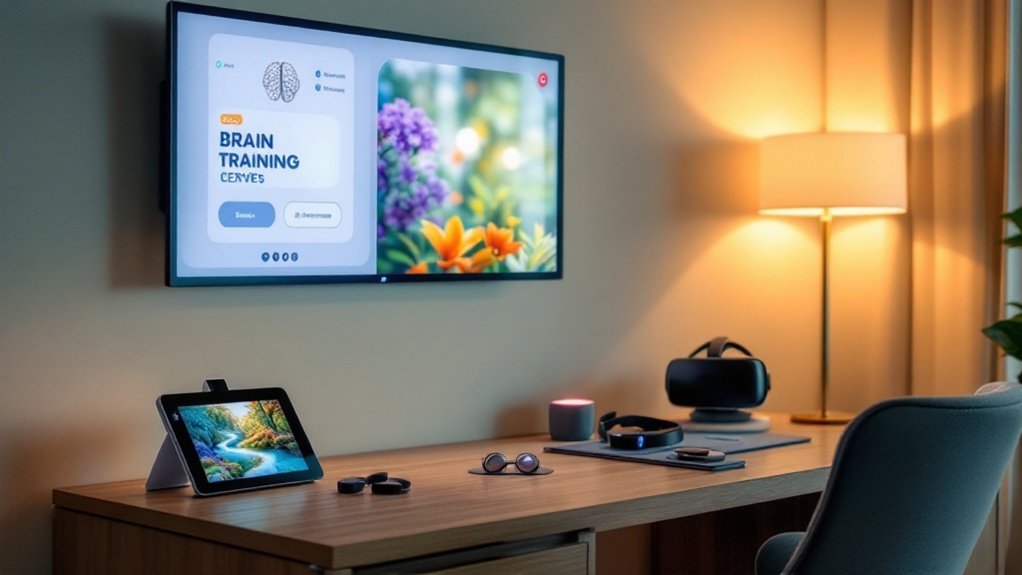
The integration of advanced technological solutions has revolutionized memory care interventions, with digital platforms demonstrating a 45% improvement in cognitive task performance among individuals with mild to moderate memory impairment.
You’ll find that AI-powered systems now analyze health data in real-time, creating dynamic care plans that adapt to your changing cognitive needs, while VR/AR technologies offer immersive environments that strengthen neural pathways through targeted exercises. Talking photo frames with recorded memories enhance cognitive engagement through personalized visual storytelling.
Smart home integration, coupled with wearable devices, provides you with a thorough monitoring system that’s shown to reduce adverse incidents by 38%. Specialized digital pill dispensers help ensure medication compliance through automated reminders and tracking. Patient-centric environments foster a sense of comfort and familiarity, essential for successful memory care outcomes.
You can leverage voice-activated assistants and GPS tracking to maintain independence while ensuring safety, as digital memory aids enhance your daily functioning through location-based reminders and structured cognitive exercises that promote sustained engagement.
Frequently Asked Questions
How Long Does It Take to See Improvements From Cognitive Stimulation Activities?
You’ll typically observe initial improvements within several weeks of starting cognitive stimulation activities, with social interaction benefits emerging earliest.
Cognitive enhancements become measurable after 14-16 structured sessions, particularly when conducted twice weekly.
While immediate benefits are noticeable within months, you’ll need continuous engagement to maintain improvements, as effects can last up to three months post-program completion.
What Are the Costs Associated With Memory Care and Cognitive Therapy?
You’ll need to budget approximately $6,450 monthly for memory care’s national median cost, though prices range from $4,000 to $11,000 depending on your location.
The total lifetime cost for dementia care averages $321,780, with families covering 70% through out-of-pocket expenses.
While cognitive therapy costs vary, it’s often included in memory care facilities’ all-encompassing services, alongside meals, 24-hour supervision, housekeeping, and safety protocols.
Can Cognitive Stimulation Prevent the Onset of Dementia or Alzheimer’s?
While cognitive stimulation can’t definitively prevent dementia or Alzheimer’s onset, you’ll find it offers protective benefits by strengthening neural connections and maintaining cognitive function.
Research indicates that regular engagement in mentally challenging activities may delay cognitive decline, though it’s not a guaranteed preventive measure.
You’ll achieve ideal results when combining cognitive stimulation with other interventions like physical exercise and social engagement as part of an all-encompassing brain health strategy.
How Often Should Cognitive Stimulation Activities Be Performed Each Day?
You’ll achieve ideal cognitive benefits by engaging in structured stimulation activities at least twice daily, with each session lasting approximately 45 minutes.
Your activities should combine various types of mental exercises, including puzzles, discussions, and reminiscence work.
Research indicates that incorporating two weekly group sessions alongside daily individual activities maximizes cognitive function and helps maintain mental acuity.
Spacing activities throughout the day prevents mental fatigue and enhances engagement.
Can Family Members Effectively Provide Cognitive Stimulation at Home?
You’ll find that family members can effectively deliver cognitive stimulation at home, as research demonstrates significant benefits when caregivers implement structured activities.
Your success depends on tailoring interventions to the individual’s interests and cognitive abilities while maintaining consistency in delivery.
Studies show that family-led cognitive stimulation can improve both the care recipient’s cognitive function and quality of life, while simultaneously enhancing the caregiver’s sense of competence and reducing negative attitudes toward dementia care.