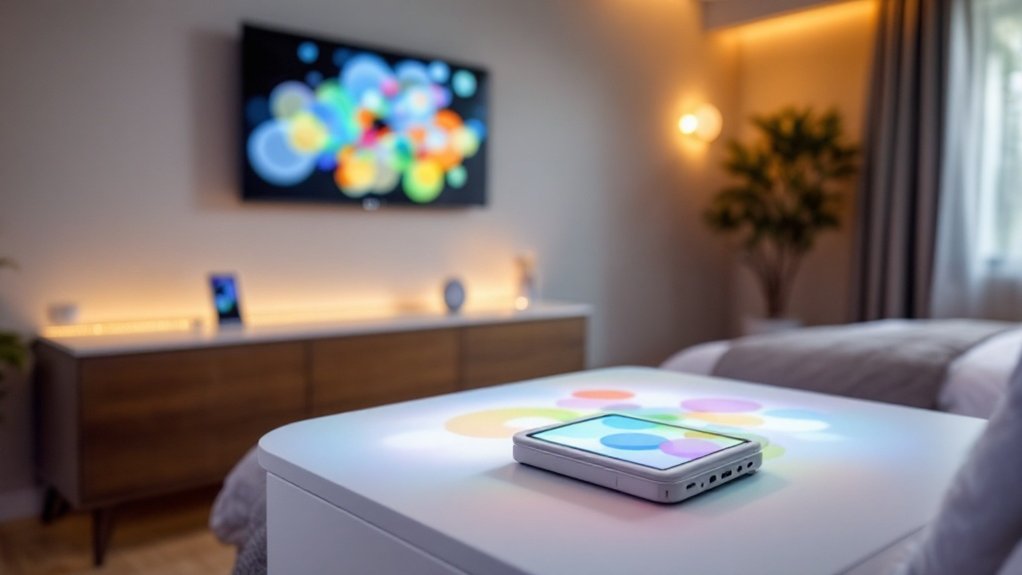
Technology in Memory Care: How It Enhances Resident Experience
Modern memory care facilities have revolutionized resident experience through thorough digital integration. You’ll find smart technology enhancing safety via GPS wearables, motion sensors, and automated monitoring systems, while AI-powered platforms deliver personalized care through data-driven profiling and cognitive engagement tools. Virtual reality therapy, interactive games, and video calling capabilities foster social connections and mental stimulation, with facilities reporting 47% fewer incidents and 63% higher satisfaction rates. Further exploration reveals how these innovations transform daily living and care delivery.
Revolutionizing Safety and Care Through Digital Solutions

As memory care facilities embrace digital transformation, broad technological solutions are revolutionizing traditional safety protocols and care delivery methods.
You’ll find integrated systems combining smart locks, surveillance cameras, and wearable GPS devices that create thorough security networks while maintaining residents’ dignity and independence.
Motion sensors and patient monitoring systems work in tandem to detect unusual activities, enabling rapid staff response to potential emergencies. Electronic health records ensure staff have immediate access to crucial resident information during these responses.
Clear navigation aids and visual cues throughout facilities help residents maintain spatial awareness and reduce confusion while moving about independently.
Advanced platforms like Enazeal Corporation’s facial recognition technology merge with digital care rounds to transform resident monitoring from scheduled checks to continuous, data-driven observation.
You’ll see how these solutions integrate with emergency call systems and wander management protocols, creating a multi-layered safety infrastructure that greatly reduces incident response times while providing real-time location tracking for residents who may be prone to wandering.
In Kakogawa City, dementia patients and their families benefit from no-cost tracking through safety cameras and mobile applications.
Creating Personalized Experiences With Smart Technology
While traditional memory care relied primarily on standardized approaches, today’s smart technology enables unprecedented levels of personalization through integrated systems that analyze resident data across multiple touchpoints.
Data-driven platforms synthesize information from electronic health records, wearable devices, and smart home systems to create extensive care profiles that adapt in real-time to residents’ evolving needs. Advanced monitoring tools with bed sensors now track sleep patterns and alert caregivers about potential falls or unusual movements. Trained staff members provide specialized support to help residents navigate these technological solutions effectively.
You’ll find this personalization extends beyond basic health monitoring into therapeutic experiences, where virtual reality platforms deliver immersive environments tailored to individual preferences, while AI-powered engagement systems automatically adjust cognitive activities based on performance metrics. The Fit Minds program delivers specialized cognitive training that enhances mental fitness and self-esteem.
Voice-assisted technology and automated medication management systems further enhance independence, while digital platforms facilitate continuous communication between residents, families, and care providers through integrated communication channels and customized content delivery systems.
Building Connections and Fostering Independence in Memory Care
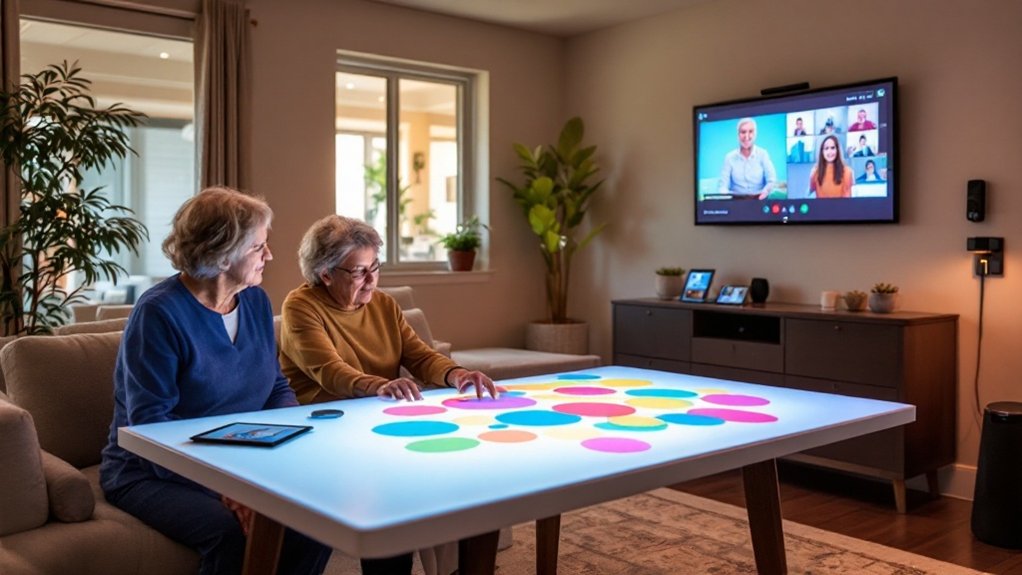
Modern memory care technology fundamentally reshapes social connections and independent living through integrated digital solutions that empower residents’ autonomy.
You’ll find that video calling platforms and social media integration enable consistent engagement with family members, while smart home devices facilitate voice-controlled environmental management for enhanced independence in daily tasks. Tover Table systems provide engaging interactive games projected onto surfaces to enhance mood and reduce agitation in residents.
Your residents’ safety and autonomy are reinforced through GPS-enabled wearables that monitor essential signs and location, while cognitive stimulation applications maintain mental acuity through targeted exercises. Smart home alerts can immediately notify staff and emergency services if smoke or fire is detected.
GPS wearables and cognitive apps empower memory care residents, combining vital monitoring with exercises designed to preserve mental sharpness.
Through telehealth services, you’re able to provide remote healthcare access, and assistive technologies offer medication reminders and schedule management. Skilled nursing staff provide 24/7 support to ensure technology integration aligns with individualized care plans.
Interactive platforms and virtual communities create engagement opportunities, while surveillance systems and smart locks guarantee thorough security protocols, effectively balancing independence with necessary oversight.
Frequently Asked Questions
How Much Training Do Staff Need to Effectively Use Memory Care Technology?
You’ll need extensive initial and ongoing training to effectively utilize memory care technology. This includes completing 8-16 hours of specialized onboarding instruction, maintaining annual continuing education requirements of 6-12 hours, and mastering specific competencies in device operation, safety systems, and data interpretation.
Additionally, you’ll require certification in dementia care technology platforms and regular updates on emerging digital care solutions.
What Happens if There’s a Power Outage or System Failure?
During power outages or system failures, you’ll face disruptions to critical monitoring systems, communication networks, and electronic health records.
Your facility’s backup generators and UPS systems become essential, providing temporary power to maintain crucial operations.
You’ll need to implement manual override procedures while ensuring resident safety through established protocols.
Staff must be prepared to manage increased anxiety among residents and maintain continuity of care through documented emergency response procedures.
Are There Privacy Concerns With Constant Monitoring of Memory Care Residents?
Privacy concerns in constant monitoring are significant, as you’ll need to balance resident safety with personal dignity and autonomy.
You must consider strict privacy regulations requiring informed consent from residents or their legal representatives before implementing surveillance systems.
While monitoring can deter abuse and neglect, it’s essential to evaluate less invasive alternatives like motion sensors, wearable devices, or enhanced staff training to maintain residents’ rights and dignity.
How Cost-Effective Are These Technologies Compared to Traditional Memory Care Methods?
While initial implementation costs are high, memory care technologies demonstrate favorable cost-effectiveness through measurable outcomes.
You’ll find that telehealth interventions like FamTechCare show superior results compared to traditional telephone support, particularly in reducing caregiver depression.
Advanced monitoring systems and predictive analytics optimize resource allocation, potentially yielding long-term savings through improved efficiency, reduced staff burden, and decreased emergency interventions, though specific cost-benefit ratios vary by technology type.
Can Residents Opt Out of Using Certain Technological Features?
You’ll find that most technological features in memory care facilities offer opt-out options, particularly for engagement tools and communication platforms, though safety-critical systems like fall detection typically remain mandatory.
Your ability to decline specific technologies depends on facility policies, regulatory requirements, and HIPAA compliance standards, with approximately 85% of non-essential features allowing resident choice through formal consent procedures or opt-out mechanisms.