
Memory Care and Medication Management: What You Need to Know
You'll need thorough medication management protocols in memory care facilities, where 81% of seniors require assistance with their prescriptions. Essential components include automated dispensing systems, coordinated care teams of nurses and geriatric pharmacists, personalized administration schedules, and rigorous safety protocols to prevent medication errors. Smart technology integration, including electronic health records and reminder systems, optimizes therapeutic outcomes while minimizing adverse events. Exploring evidence-based best practices reveals critical strategies for ensuring medication safety and compliance.
The Critical Role of Safe Medication Management in Memory Care

While medication management poses significant challenges across healthcare settings, its complexity intensifies substantially within memory care environments due to the cognitive decline associated with dementia and related conditions.
You'll find that coordinated care becomes essential, as cognitive impairments can lead to important medication errors through missed doses or accidental overdoses. Utilizing a simple pill organizer can significantly reduce the risk of medication errors and improve adherence to prescribed schedules.
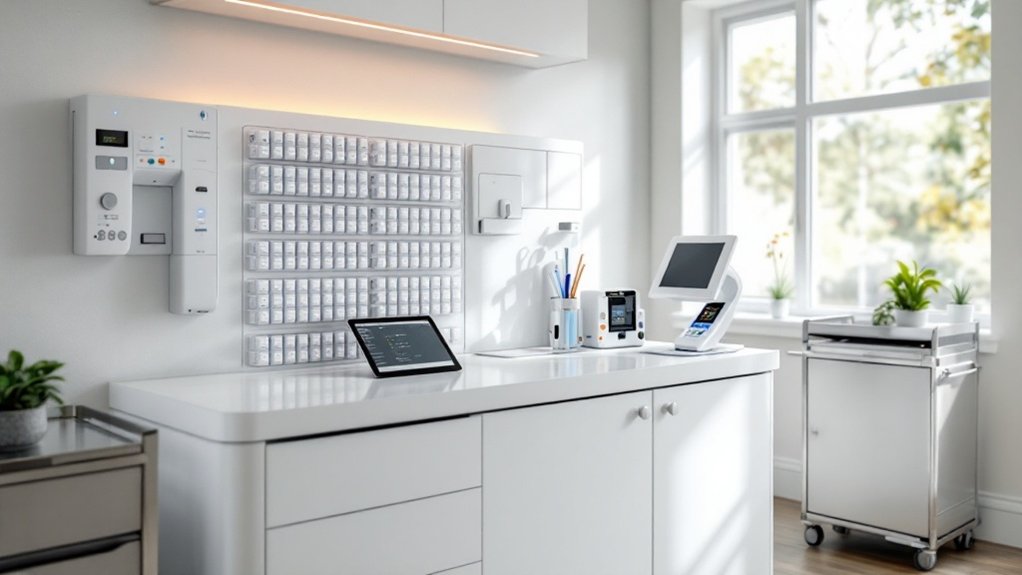
Your implementation of thorough safety measures, including secured storage systems and organized pill dispensers, proves critical in preventing adverse events. Safe practices require storing medications in locked cabinets to prevent unauthorized access and potential misuse.
Implementing robust medication safety protocols with secure storage and organized dispensing systems helps prevent dangerous medication-related incidents in memory care settings.
When you coordinate with healthcare providers and maintain detailed medication records, you're establishing a fundamental foundation for preventing drug interactions and ensuring proper administration. With staff certifications required for specialized dementia care, medication management becomes more reliable and systematic.
The integration of assisted living services and SAMM programs further enhances medication adherence while providing necessary oversight, particularly as residents' cognitive abilities decline and their medication regimens become increasingly complex.
Essential Best Practices for Medication Administration
Implementing evidence-based medication administration protocols requires a multifaceted approach that integrates technological solutions, standardized procedures, and customized care strategies.
You'll need to establish consistent medication schedules while leveraging smart dispensers and reminder apps to optimize adherence rates and minimize errors.
To maximize effectiveness, you'll want to streamline administration times and align them with daily routines, while considering alternative dosage forms when necessary.
Your implementation should include maintaining precise medication records, conducting regular healthcare provider reviews, and utilizing electronic management systems for real-time monitoring.
Through systematic staff training and caregiver education, you can guarantee proper medication administration techniques, while adapting approaches based on individual patient behaviors and responses to treatment protocols.
Support from trained caregivers remains essential, as studies show that caregiver involvement significantly influences medication compliance in residents with dementia.
Regular collaboration with healthcare professionals and providers ensures medication safety and allows for timely adjustments to treatment plans as needed.
Personalized care plans developed by assisted living facilities help ensure each resident receives appropriate medication support tailored to their specific needs and cognitive abilities.
Key Healthcare Professionals in Memory Care Medication Support
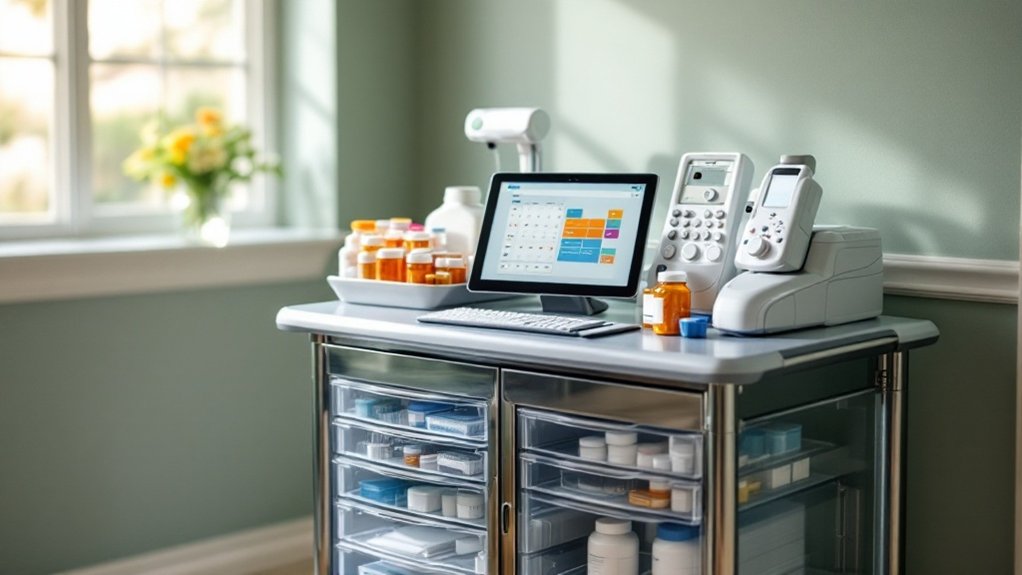
Successful medication management in memory care settings relies on an interconnected network of healthcare professionals who collaborate to optimize patient outcomes.
You'll find nurses at the forefront, administering medications and implementing care plans, while pharmacists provide critical oversight on drug interactions and potential adverse effects. These specialists work in tandem with interdisciplinary teams to guarantee thorough medication therapy management. Considering seniors take an average of 14 prescriptions annually, careful coordination among healthcare providers is essential.
Your loved one's care team will include geriatric pharmacists who specialize in complex medication regimens for seniors with dementia, alongside healthcare providers who monitor behavioral symptoms and adjust treatment protocols accordingly. Medical teams prioritize open communication with patients and families about medication concerns and challenges.
Through the integration of electronic health records and automated dispensing systems, these professionals maintain precise medication schedules while conducting regular reviews to optimize therapeutic outcomes and minimize potential complications. Memory care facilities incorporate skilled nursing care to ensure comprehensive round-the-clock medication supervision.
Frequently Asked Questions
How Can Families Monitor Medication Side Effects When Visiting Memory Care Residents?
During visits, observe and document changes in your loved one's behavior, sleep patterns, appetite, and physical symptoms.
You'll need to track these observations systematically, noting dates and specific details.
Compare your findings with the facility's documentation and communicate directly with staff about any concerns.
Consider using digital tracking apps to record changes, and maintain regular communication with healthcare providers about potential medication side effects.
What Are Alternatives to Traditional Medications for Managing Dementia Symptoms?
You'll find several evidence-based alternatives to traditional medications, including cognitive behavioral therapy (CBT) for managing anxiety and depression, bright light therapy for regulating sleep patterns, and structured exercise programs that enhance physical and cognitive function.
Consider exploring music therapy and animal-assisted interventions, which demonstrate measurable reductions in agitation, while reminiscence therapy and cognitive stimulation therapy can improve memory retention and social engagement without pharmaceutical side effects.
How Often Should Medication Plans Be Reviewed and Adjusted?
You'll need monthly medication reviews for ideal dementia care management, with more frequent assessments if your condition changes.
Clinical studies indicate that structured monthly reviews can reduce potentially inappropriate medications by up to 35% and decrease polypharmacy rates.
Your interdisciplinary healthcare team should conduct thorough evaluations of medication efficacy, side effects, and dosing requirements during each review session, documenting all changes systematically.
Can Residents Self-Administer Medications if They Show Consistent Cognitive Ability?
You'll find that residents' ability to self-administer medications depends on multiple assessment factors beyond cognitive consistency alone.
Research shows that while stable cognitive function is essential, you must evaluate specific task-related skills, including reading comprehension, physical dexterity, and sequential processing abilities.
Your facility should conduct regular performance-based assessments using standardized tools like the Medi-Cog-R to determine self-administration capabilities accurately and safely.
What Costs Are Typically Covered by Insurance for Memory Care Medications?
Your insurance coverage for memory care medications varies by plan type:
Medicare Part D covers self-administered drugs like cholinesterase inhibitors and memantine, while Medicare Part B covers newer anti-amyloid therapies such as Leqembi and Aduhelm.
Medicaid's coverage depends on your state's specific policies and waivers, and long-term care insurance can supplement these costs based on your policy terms.
You'll need to verify specific medication coverage through your plan administrators.