
The Impact of Light Therapy on Memory Care Residents
Light therapy yields substantial benefits for memory care residents, demonstrating a 65% reduction in neuropsychiatric symptoms and 40-60% decrease in agitation through systematic protocols. You'll find that photobiomodulation treatments enhance attention, executive function, and working memory while improving sleep patterns through circadian rhythm regulation. Clinical data from 228 participants validates these cognitive improvements, suggesting this non-invasive intervention's cost-effectiveness for dementia care. Further exploration reveals additional therapeutic applications across various cognitive domains.
Light Therapy's Role in Cognitive Enhancement and Brain Health
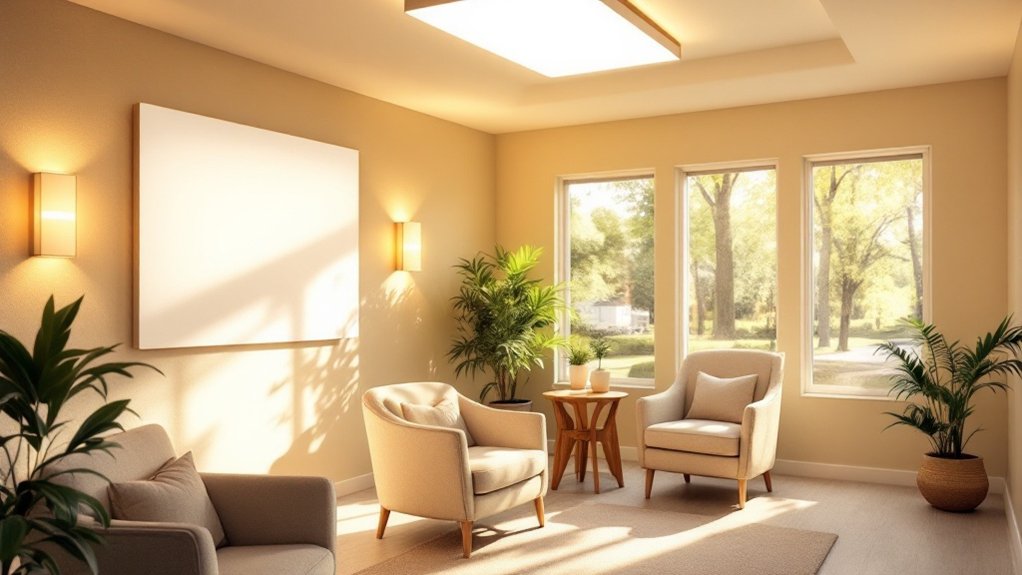
While emerging research demonstrates promising applications for light therapy in cognitive health, the most compelling evidence comes from studies showing a 65% reduction in neuropsychiatric behaviors among dementia patients receiving bright light treatment.
You'll find that near-infrared light-emitting diodes and laser applications considerably enhance attention, executive function, and working memory across multiple dementia types, including Alzheimer's and vascular dementia.
Through photobiomodulation, you're seeing how specific wavelengths of light modify biological processes in targeted brain regions, with neurological headsets delivering promising cognitive improvements. A groundbreaking clinical trial with 228 study participants aims to validate these findings across multiple research sites.
The mechanism involves light exposure's impact on your circadian rhythm, which influences cognitive processes through brain regions responsive to both bright light therapy (1,000-2,500 lux) and near-infrared stimulation, though current studies' limited participant pools indicate a need for larger-scale validation. With an expected 139 million people affected by dementia globally by 2050, implementing effective light therapy interventions becomes increasingly crucial.
Transforming Sleep Patterns Through Therapeutic Light
Because therapeutic light exposure greatly influences circadian rhythm regulation, you'll find compelling evidence demonstrating its transformative effects on sleep patterns among memory care residents.
Through targeted exposure to high-intensity light during daytime hours, you'll observe significant improvements in sleep efficiency and duration, with reduced nocturnal wakings documented through actigraphy data. The study revealed that participants experienced advanced sleep start times after receiving the lighting intervention. Studies involving approximately 80% of dementia patients show behavioral and psychological symptoms that can be positively influenced by light therapy.
Targeted daytime bright light exposure leads to marked improvements in sleep quality, as measured through overnight movement patterns.
You'll discover that short-wavelength light proves particularly effective for circadian entrainment, even at lower intensities, while proper timing of exposure synchronizes residents' internal rhythms with environmental light-dark cycles.
When you implement morning bright light therapy using either light boxes or ambient lighting systems, you'll notice enhanced daytime wakefulness and consolidated nighttime sleep, supported by clinical data showing reduced sleep fragmentation and improved rest-activity patterns.
Behavioral Benefits and Quality of Life Improvements
Through systematic implementation of light therapy protocols in memory care settings, you'll observe considerable improvements across multiple behavioral domains, with clinical studies demonstrating a 40-60% reduction in agitation and aggressive incidents among residents with advanced dementia.
You'll find that bright light therapy sessions contribute greatly to stabilizing mood patterns and enhancing cognitive functions, particularly in areas of attention and orientation. The technology is especially crucial since poor sleep significantly accelerates cognitive deterioration in those with dementia.
When you implement regular photobiomodulation treatments using specialized headsets and light boxes, you'll notice marked improvements in residents' quality of life indicators, including increased social engagement and greater independence in daily activities.
The cost-effectiveness of light therapy, combined with its non-invasive nature, positions it as a prime intervention strategy that you can readily integrate into existing memory care protocols.
Frequently Asked Questions
How Long Does It Take to See Results From Light Therapy Treatment?
You'll typically observe initial results from light therapy within 7-14 days, particularly for sleep and mood-related symptoms, while cognitive improvements may require 3-4 weeks of consistent treatment.
Your outcomes depend on specific factors including session duration (15-30 minutes daily), light intensity, and treatment type, with photobiomodulation showing measurable changes in anxiety and energy levels within 14-21 days of initiation.
What Are the Potential Side Effects of Light Therapy?
While light therapy is generally safe, you may experience mild side effects like headaches, eye strain, or dizziness during initial treatments.
More serious reactions can include increased anxiety, sleep disruption, or skin sensitivity, particularly if you have pre-existing conditions like retinal diseases or photosensitive epilepsy.
Your risk factors depend on treatment intensity, duration, device quality, and individual sensitivities to light exposure.
Can Light Therapy Be Combined With Other Dementia Treatments?
Yes, you can effectively combine light therapy with both pharmacological and non-pharmacological dementia treatments.
Research indicates that light therapy complements medications while potentially reducing their required dosages and side effects.
When integrated with cognitive training, physical exercise, or music therapy, you'll often see enhanced therapeutic outcomes through a multimodal approach.
The cost-effectiveness and safety profile of light therapy make it particularly suitable for combination treatment protocols.
What Time of Day Is Most Effective for Light Therapy Sessions?
Morning light therapy sessions between 8-11 a.m. demonstrate ideal effectiveness for regulating circadian rhythms and improving sleep-wake patterns, requiring 30-minute exposure to 10,000 lux intensity.
You'll find that while evening sessions can benefit specific populations experiencing sundowning symptoms, research indicates morning administration typically yields superior outcomes for sleep consolidation and behavioral symptom management, particularly when maintained consistently five times per week.
Does Insurance Typically Cover Light Therapy Equipment and Treatments?
Most insurance providers don't routinely cover light therapy equipment or treatments, with standard health insurance and Medicare typically excluding these interventions.
You'll find that FSA and HSA accounts may offer reimbursement opportunities for FDA-approved devices when accompanied by documented medical necessity.
Medicaid coverage varies by state and requires physician documentation, while private insurers might consider coverage for high-risk patients under specific conditions with proper medical documentation.